Foggy Mornings: Staying Safe on the Road This Autumn
Autumn Fog: A Seasonal Hazard for Drivers
As autumn settles in across Essex and Suffolk, many drivers will start to notice cooler temperatures, damp roads and one of the season's most common hazards: fog.
Foggy mornings can significantly reduce visibility and make even familiar journeys more challenging. Whether you're commuting to work, taking the school run, or heading out on longer journeys, understanding how to drive safely in fog can help keep you, your passengers, and other road users safe.

Why Fog Can Be So Dangerous
Fog doesn't just make it harder to see. It can affect your ability to judge speed, distance, and hazards ahead.
Poor visibility can make it much harder to spot slow-moving traffic ahead and gives drivers less time to react to unexpected hazards. Pedestrians, cyclists and even animals can emerge from the fog with little warning, while judging stopping distances becomes more difficult. On unfamiliar or rural roads, fog can also make it harder to recognise bends, junctions and landmarks, increasing the risk of becoming disorientated.
Many fog-related accidents occur because drivers are travelling too fast for the conditions, even when they're within the speed limit. The key is to adjust your driving to what you can actually see, not what the road allows in ideal conditions.
Make Sure Other Road Users Can See You
When visibility drops, it's important that your vehicle remains clearly visible to others.
Use dipped headlights as soon as conditions become misty or foggy. Daytime running lights alone may not provide enough visibility, particularly from the rear of the vehicle.
When driving in fog, always use dipped headlights as visibility begins to fall. Front fog lights should only be used in dense fog, while rear fog lights should be switched on when visibility is reduced to around 100 metres or less. Once conditions improve and visibility returns, remember to switch your fog lights off to avoid dazzling other road users.
Using lights correctly helps other drivers judge your position and distance more accurately.

Reduce Your Speed and Leave More Space
One of the biggest dangers in fog is that it can make you feel as though you're travelling more slowly than you really are.
Slow down earlier than you think you need to and keep a larger gap between you and the vehicle ahead.
In foggy conditions, it's best to drive smoothly and give yourself plenty of time to react. Accelerate gradually, brake gently and earlier than usual, and leave a larger gap between you and the vehicle ahead. Avoid sudden manoeuvres wherever possible, as smooth driving helps maintain control and improves safety when visibility is reduced
With reduced visibility and damp autumn road surfaces, stopping distances can increase significantly.

Let Road Markings Guide You
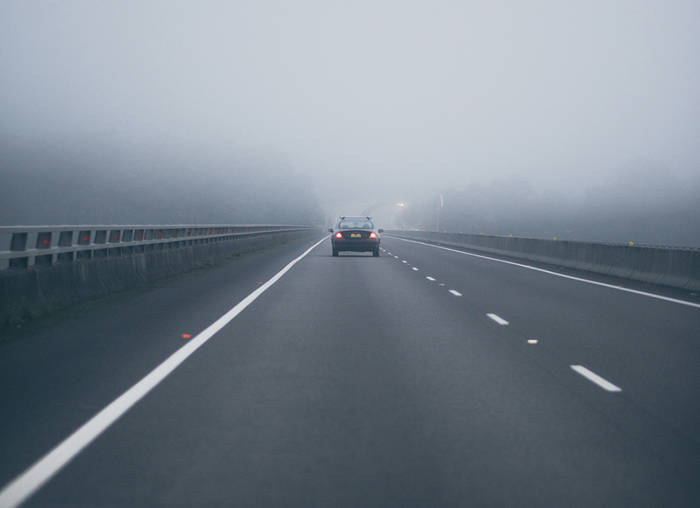
In thicker fog, your headlights may only illuminate a short section of road ahead. In these situations, road markings become invaluable.
Pay close attention to centre lines, edge markings and reflective road studs (cats eyes) as these visual markers can help you maintain your position on the road without becoming disorientated.
When Visibility Becomes Too Poor
Sometimes conditions become so severe that continuing your journey may not be the safest option.
If visibility becomes extremely limited, consider pulling into a safe car park or lay-by until conditions improve. Avoid stopping on the roadside unless absolutely necessary, and keep your lights on so that your vehicle remains visible to other road users while stationary
Waiting a few minutes for conditions to improve could be far safer than pressing on through dense fog.

Is Your Car Ready for Autumn Driving?
Your vehicle plays a major role in keeping you safe during foggy weather.
Before setting off on a foggy morning, take a few moments to ensure your vehicle is ready for the conditions. Make sure your windscreen is clean inside and out, your wiper blades are working effectively, screen wash is topped up, all lights are functioning correctly, and your heating and demister systems are operating properly.
These simple checks can greatly improve visibility and road safety when driving in poor weather
A dirty windscreen or ineffective wiper blades can dramatically reduce visibility when conditions are already challenging.

Get Prepared for Autumn With Europit
Good visibility starts with a well-maintained vehicle. From replacement wiper blades and tyre checks to full vehicle servicing, keeping your car in top condition can make a significant difference during challenging autumn driving conditions.
As the weather becomes colder and wetter, small issues can quickly become bigger safety concerns. Regular maintenance helps ensure your vehicle is ready to handle reduced visibility, damp roads and changing conditions throughout the season.
If you're unsure whether your vehicle is ready for the colder months ahead, the team at Europit is always here to help. Contact Europit today to book a vehicle health check and drive into autumn with confidence.